
Why a CA the whole year saves more than a CA in July.
"Why do I need a CA for 365 days when I only file ITR once a year?"
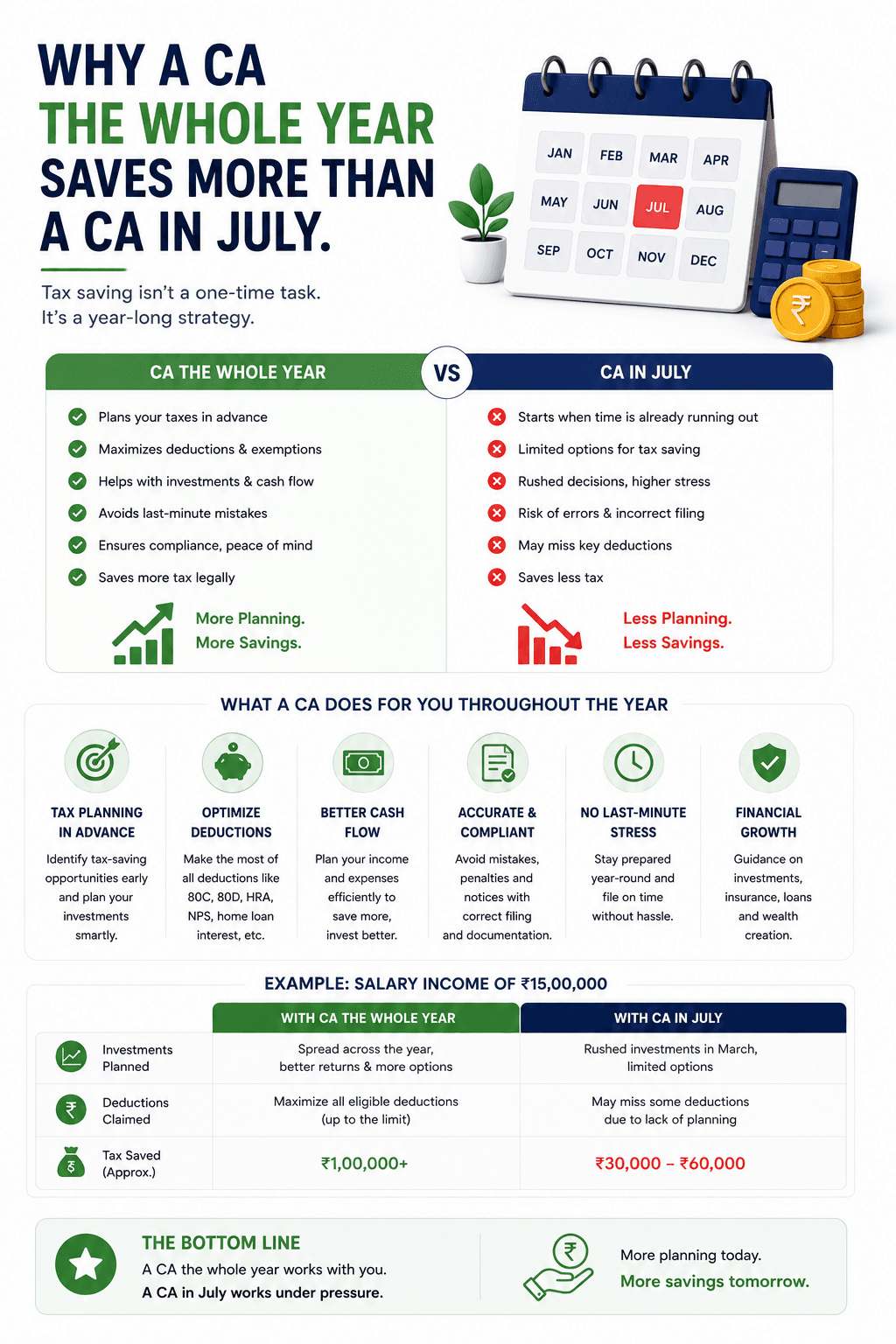
The majority of individuals think about taxes only once a year – come July when it’s time to file your ITR. The fiscal year is already over. It’s a reporting year; there’s no changing. All those decisions that would have helped you save money were taken in April, October, and December.
April is the month you decide your regime, restructure your salary, join NPS, and inform your employer of your investments through Form 12BB. A mistake in regime in April loses you the entire year.
September is when your second advance tax payment is due. If you earn from freelancing or have capital gains or rental income, then not paying advance tax means earning interest of 1% per month through Sections 234B and 234C.
December is when your employer asks for proofs of your investments. If you have failed to make the most of Section 80C or NPS till then, you’ll have to incur excess TDS every month till the year-end.
If you’re sitting with a chartered accountant in January 15, he will inform you that “You’ve got ₹45,000 of savings left for the year if you invest in NPS now.” This is something which does not happen in July.