
Which ITR form should you file? The complete decision guide.
"There are so many ITR forms. Which one applies to me?"
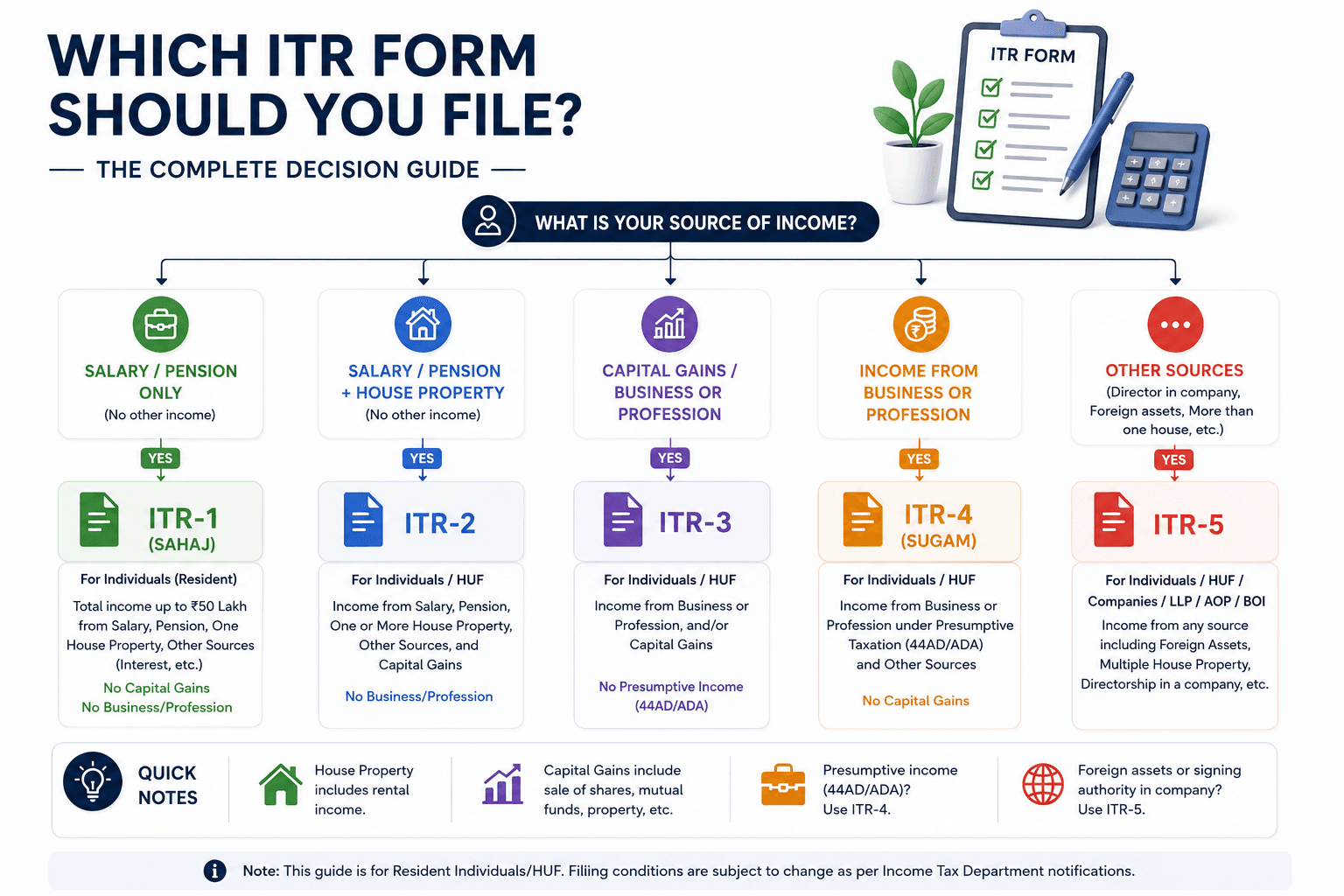
Filing of ITR-1 is the most common error. Salaried people think that they always have to file ITR-1. But not. ITR-1 is meant only for most basic salary-based returns — total income below ₹50L, no capital gains, no foreign assets, one single property only, and no business income.
Once you have sold even one stock and earned a capital gain, you require ITR-2. Once you have any foreign bank account, or RSU from US companies, you must have ITR-2 along with FA schedule. Also, if you have any business income at all (freelance, consulting, Uber, etc.), then you must use either ITR-3 or ITR-4.
The principle here is: in case of doubts, use the more detailed form. Filing ITR-2 instead of ITR-1 will always be on the safer side. But using ITR-1 instead of ITR-2 can be a problem.