
RSU vesting: the tax your employer collects but most employees never understood.
"My company gave me RSUs that vested this year. What tax do I owe?"
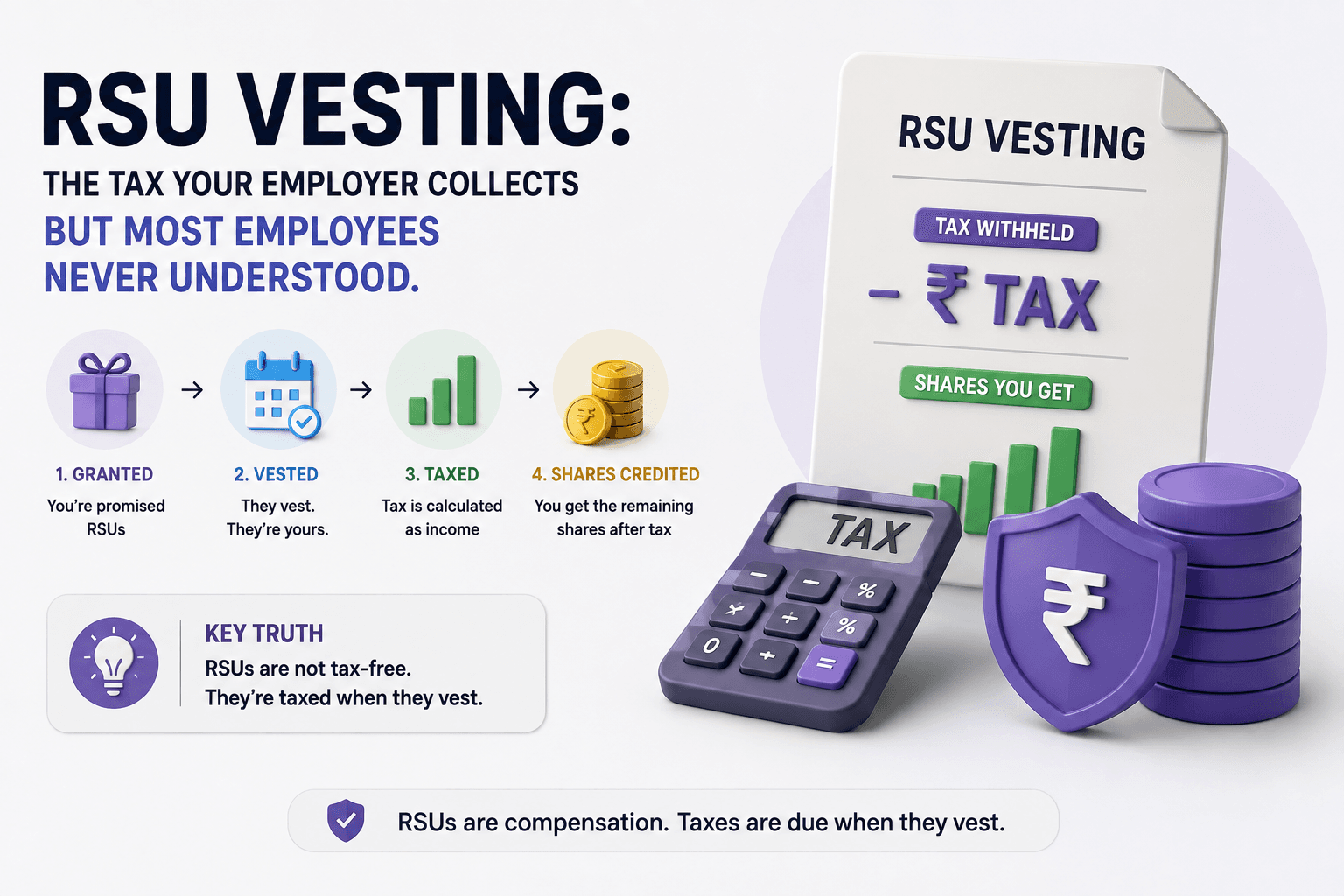
RSUs (restricted stock units) are one of the most poorly understood components of executive compensation. Employees are aware that "they got shares," but do not realize they have generated two different taxable events, first at vesting, then at sale.
First at vesting: the FMV (Fair Market Value) of shares on the date of vesting minus the exercise price (₹0 usually) is considered a perquisite (salary income). It should be withheld by your employer as TDS. This shows up in your Form 16 as "value of perquisites."
Next at sale: The difference between the sale value and FMV on the date of vesting is capital gain. If held for more than 24 months (in case of listed Indian shares – 12 months), it is taxed as LTCG at 12.5% after ₹1.25 lakh. Otherwise it is taxed as STCG at 20%.
For US RSUs (ESOPs from American company): Same as above but filing Schedule FA in ITR is compulsory whether or not you have sold the shares.