
Resignation and gratuity: what you're legally owed and how it's taxed.
"I'm leaving my job after 6 years. How much gratuity will I get and will I pay tax on it?"
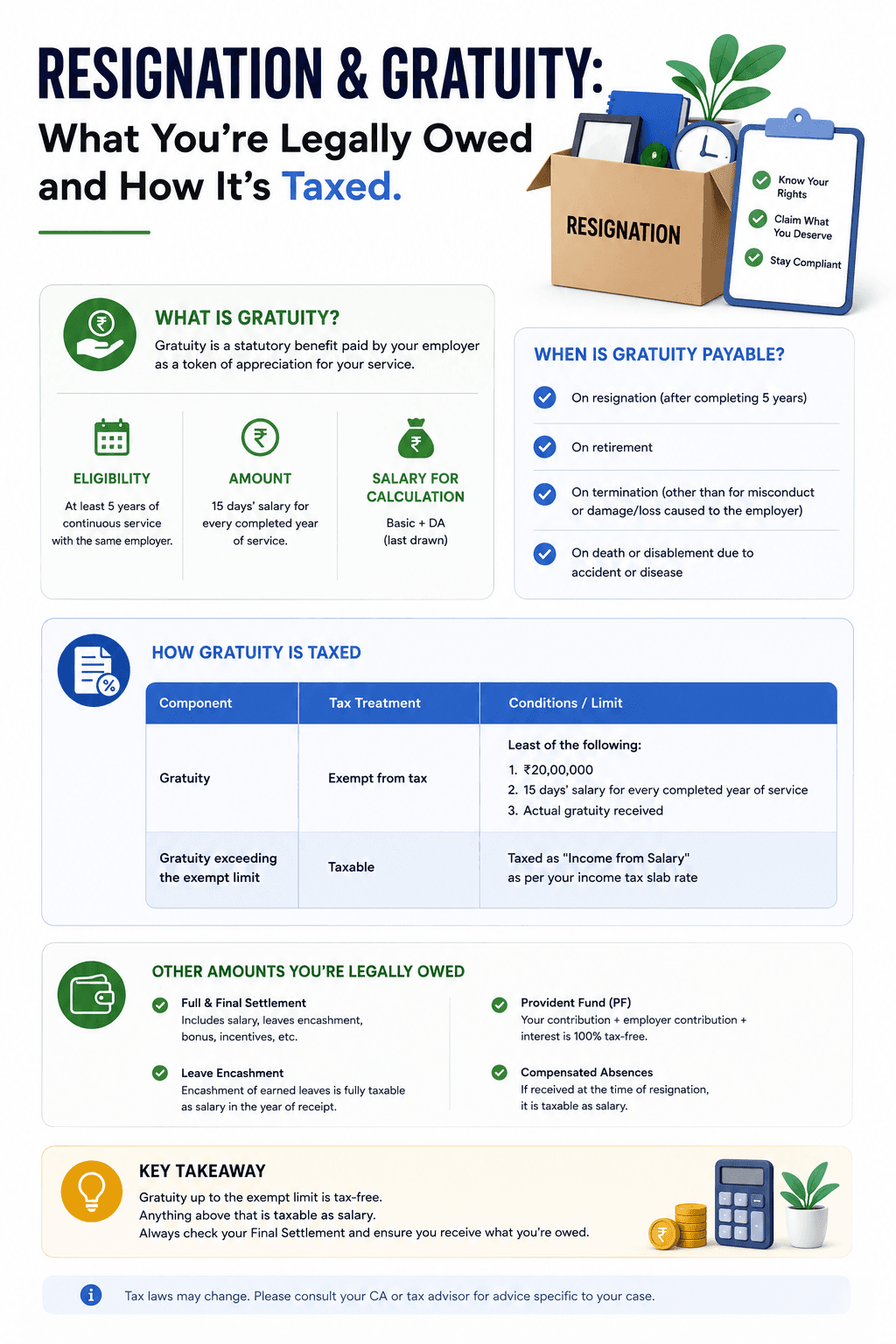
Gratuity is an allowance which every worker is aware that he/she will be getting but hardly anyone knows how it is worked out and taxed. According to Payment of Gratuity Act, 1972, any worker who has served for 5 years continuously is eligible for gratuity on the occasion of resignation, retirement, disablement, or death.
Formula: 15 days * last drawn basic salary * years of completed service / 26 (working days per month). The exemption limit for non-governmental workers falling under the Gratuity Act has been increased from ₹20 lakh.
What the law says — exact provisions
Section 10(10)
Gratuity exempt: for govt employees — fully. For non-govt (Gratuity Act covered): least of actual received, ₹20L, or formula amount.
Payment of Gratuity Act 1972
5 years continuous service required. 15/26 × basic × years formula applies.
Section 10(10AA)
Leave encashment at retirement: exempt up to ₹25L for non-government employees.
Section 10(10C)
VRS compensation exempt up to ₹5L — available once in a lifetime.
CA Rishabh's verdict
Bottom line
At 6 years, you qualify for full gratuity. Up to ₹20L is completely tax-free. Calculate your exact entitlement before negotiating your full and final settlement.