
Old regime vs new regime: the honest comparison nobody gives you.
"Which tax regime is actually better for me this year?"
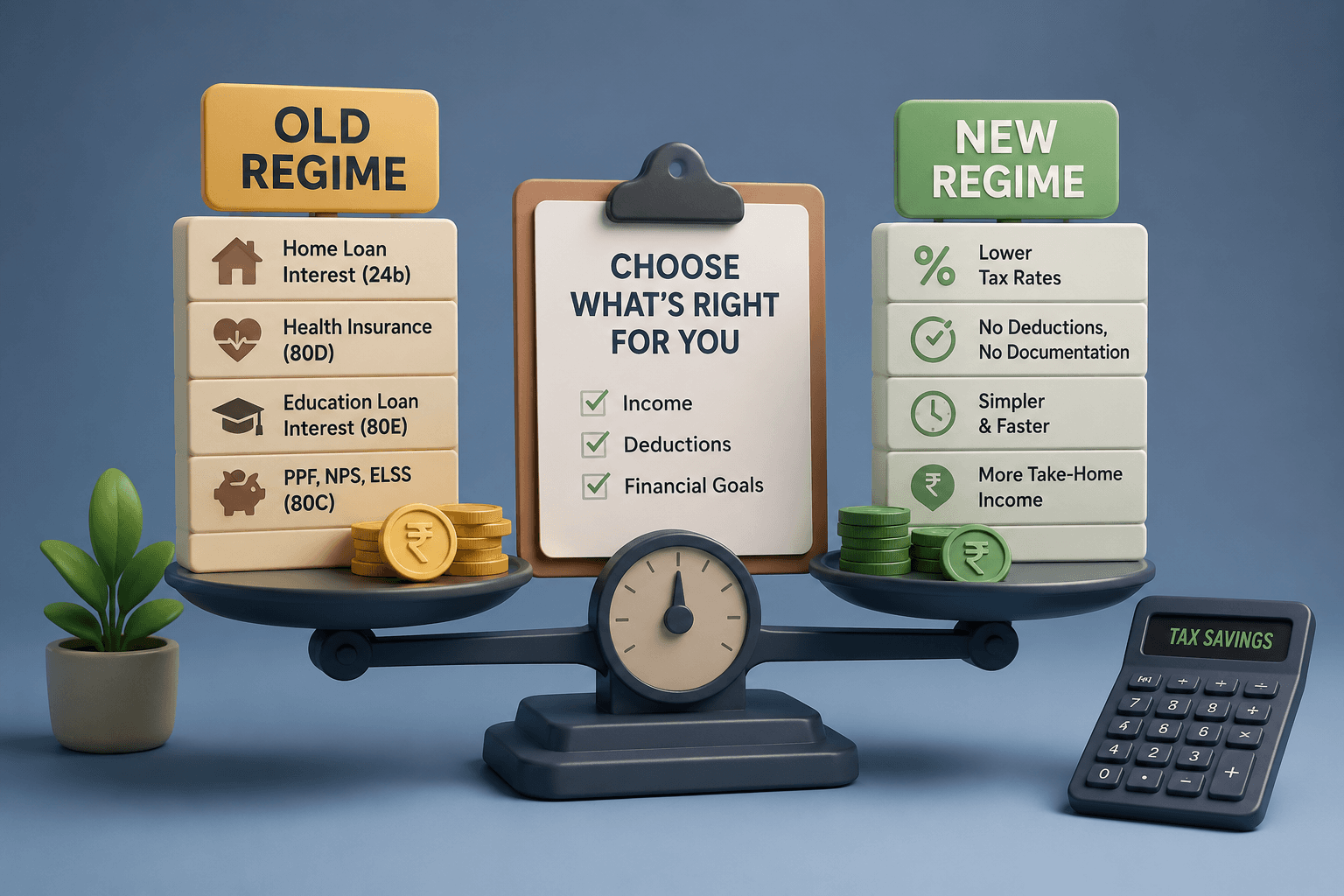
Calculators comparing old versus new regime abound online. Very few give you an accurate result – that depends entirely on your own deduction situation. There is no absolute answer to this problem.
Here's the honest approach: New regime will be favorable in case of your total deductions being below ₹3.75 lakh. Old regime is preferable when you are above this value. Break even point for salary of ₹15 lakh is around ₹3,75,000 worth of legitimate deductions. If you have the following deductions: ₹1,50,000 (80C) + ₹50,000 (NPS) + ₹25,000 (80D) + ₹2,00,000 (interest paid on home loan) = ₹4,25,000, you save about ₹12,750 using the old regime.
However, most people's 80C investment is made for generating wealth rather than reducing taxes. Their 80D deduction is low. Their HRA is moderate. Under these circumstances, new regime with ₹75,000 standard deduction and reduced slab rates is clearly more favorable.