
NEW BILL, TOUGHER RULES: WHAT INDIA'S 2026 EXAM FRAUD LAW REALLY CHANGES
Within minutes, panic spread. Students started asking the same question—"Ab exam hoga bhi ya nahi?"
It was early morning when thousands of students refreshed
their phones, waiting for exam updates. Some were checking admit cards, others
discussing cut-offs in Telegram groups. Then someone dropped a message:
"Paper
leak ho gaya."
Within minutes, panic spread. Students started asking the
same question—"Ab exam hoga bhi ya nahi
Unfortunately, this scene has become familiar in India over
the last few years. Months of preparation can suddenly feel meaningless because
of a paper leak or an organised cheating racket. Honest candidates lose
confidence, recruitment gets delayed, and public trust takes a hit.
This is exactly why Parliament has passed the Public
Examinations (Prevention of Unfair Means) Amendment Bill, 2026 — cleared by
both the Lok Sabha and Rajya Sabha in July 2026, and now headed for
presidential assent. Instead of treating exam fraud as a routine offence, the
new amendment makes one thing clear—cheating in public examinations will now
carry much tougher consequences.
Why was
another amendment needed?
Imagine spending an entire year preparing for an exam. You
wake up before sunrise every day, skip family functions, avoid distractions,
and finally walk into the examination hall believing your hard work will decide
the result.
Then, just a few hours later, news starts circulating that
the paper may have leaked.
Your first thought isn't about marks. It's simply,
"Was all this hard work for nothing?"
That frustration is exactly what the new amendment is trying
to address.
The 2024 law was an important beginning, but lawmakers
believed stronger punishment and faster legal action were necessary to
discourage organised exam fraud. The 2026 amendment introduces stricter
penalties, fixed timelines for investigations, and greater accountability for
everyone involved—from individual offenders to organised syndicates.
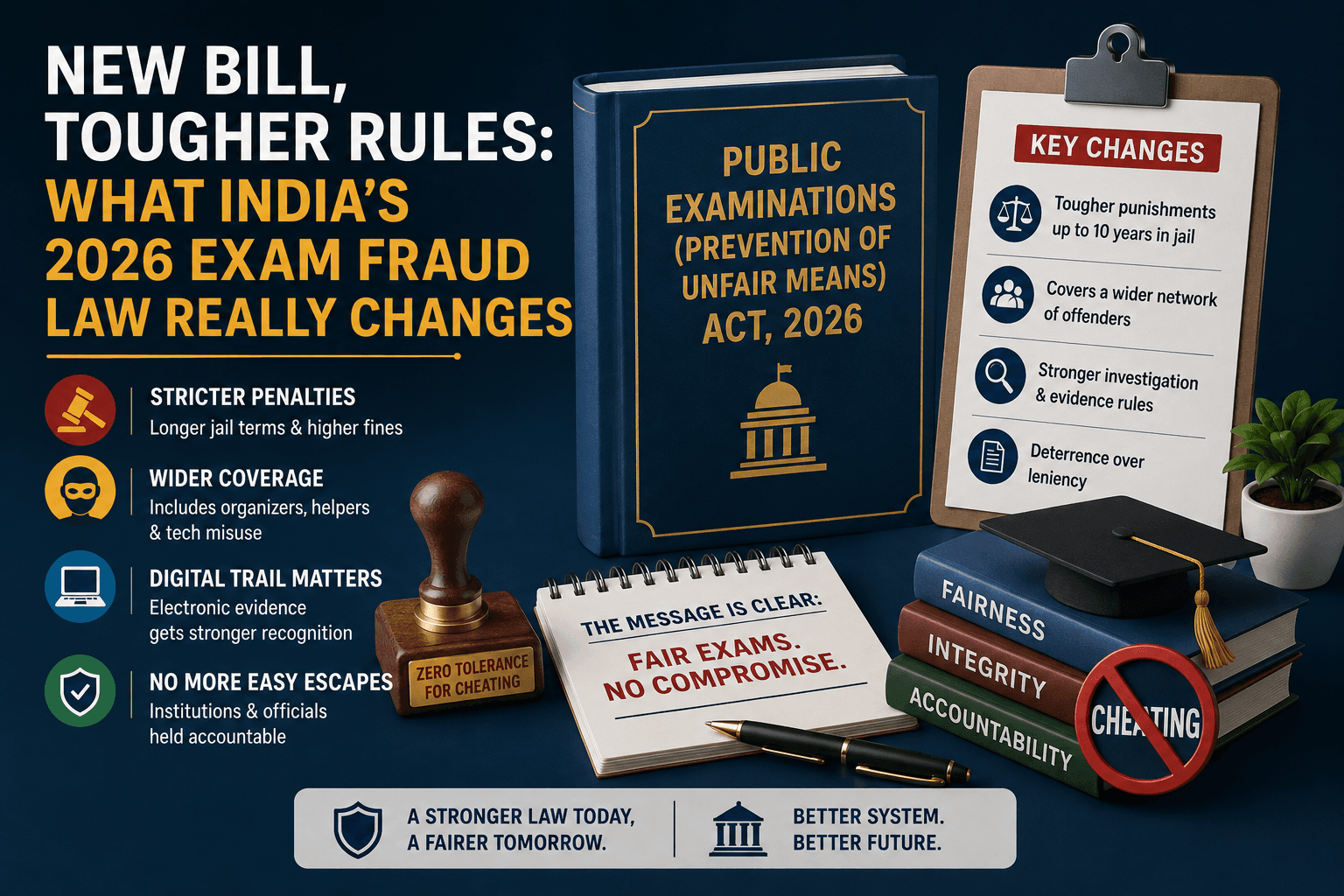
So, what does the amendment actually change?
Here’s where the 2026 amendment gets specific:
• Bigger punishment for offenders —
penalties for using unfair means have been enhanced beyond what the 2024 Act
prescribed.
• Longer debarment for service
providers — any vendor or agency caught facilitating unfair means now faces
debarment for 8 years, up from 4.
• Fixed 2-month investigation
timeline — no more open-ended probes; investigations must wrap up within two
months.
• A dedicated Special Task Force —
the central government can now set up a task force specifically to investigate
offences under the Act.
• Fast-track courts and Special
Public Prosecutors — cases will move through special courts for speedy trials,
with dedicated prosecutors assigned.
• Time-bound appeals — even the
appeals process now has a deadline, so cases can’t drag on indefinitely.
Together, these changes are meant to close the gap between
“an offence happened” and “someone is actually held accountable” — which is
usually where public trust breaks down.
Which
examinations does the law cover?
The amendment applies to major public examinations conducted
by organisations such as:
- UPSC
- SSC
- RRB
- IBPS
- NTA
- Other notified public examination authorities
Whether it's recruitment or entrance examinations, the
objective is the same—protect the integrity of the examination process.