
Dividend income: why it's not as passive as it seems.
"I received ₹80,000 dividend from my stock portfolio. Is it tax-free?"
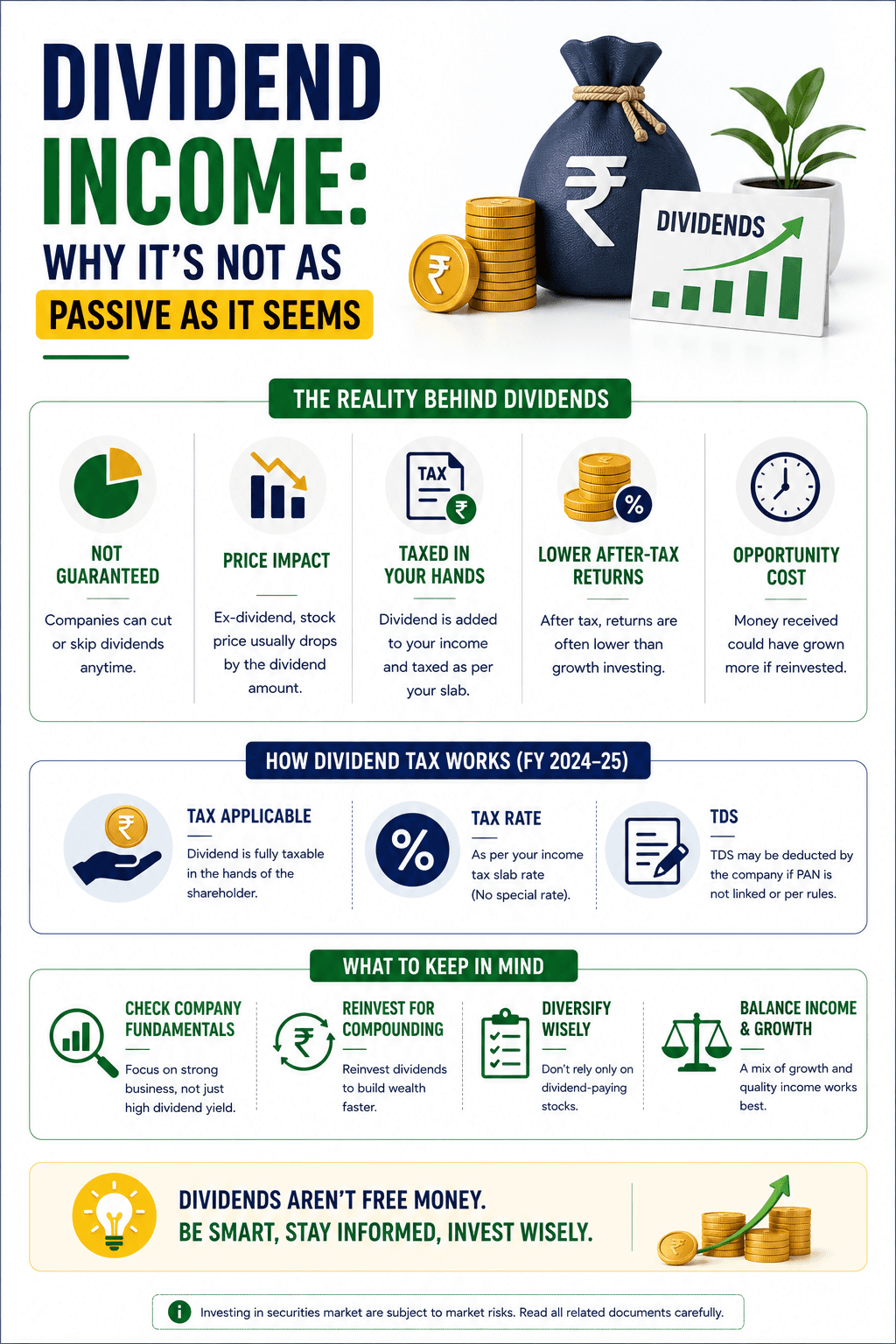
Dividends have been taxed since April 1, 2020, in India. Dividends received from Indian companies were earlier exempt in the hands of investors (Dividend Distribution Tax was paid by the company). For FY 2020-21 onwards, dividends received by investors will be fully taxed as per their slab rates.
Your ₹80,000 dividend is income. If your slab rate is 30%, the dividend income will attract ₹24,960 tax. If your dividend income exceeds ₹5,000 per company per year, the company pays 10% TDS on dividends. It shows up in 26AS. If you do not declare dividends in your ITR, your income will attract scrutiny from the Income Tax Department.
Buyback Income – An important exemption to note is that Section 10(34A) provides an exemption for buy-back income under certain conditions. Foreign dividend income is also taxable at slab rates.